
How to Choose a Reliable Wireless Camera System for Offshore Crane Applications

When selecting a camera monitoring system for offshore cranes, many customers focus on image quality and wireless transmission distance. However, offshore applications require much more than a clear picture.
High humidity, salt-laden air, vibration, wind, and continuous outdoor exposure can directly affect the long-term reliability of cameras, batteries, and mounting systems.
A wireless camera solution that works well in normal environments may not always be suitable for offshore operations.
Why Offshore Environments Are More Challenging
Compared with standard industrial or indoor monitoring applications, offshore equipment operates in one of the most demanding environments:
- High humidity and moisture exposure
- Salt spray that can accelerate corrosion
- Strong wind and mechanical vibration
- Continuous outdoor operation
- Difficult maintenance conditions
For crane operators, a camera failure does not only mean losing video. It can reduce operational visibility and increase safety risks.
Therefore, reliability should always be considered before installation.
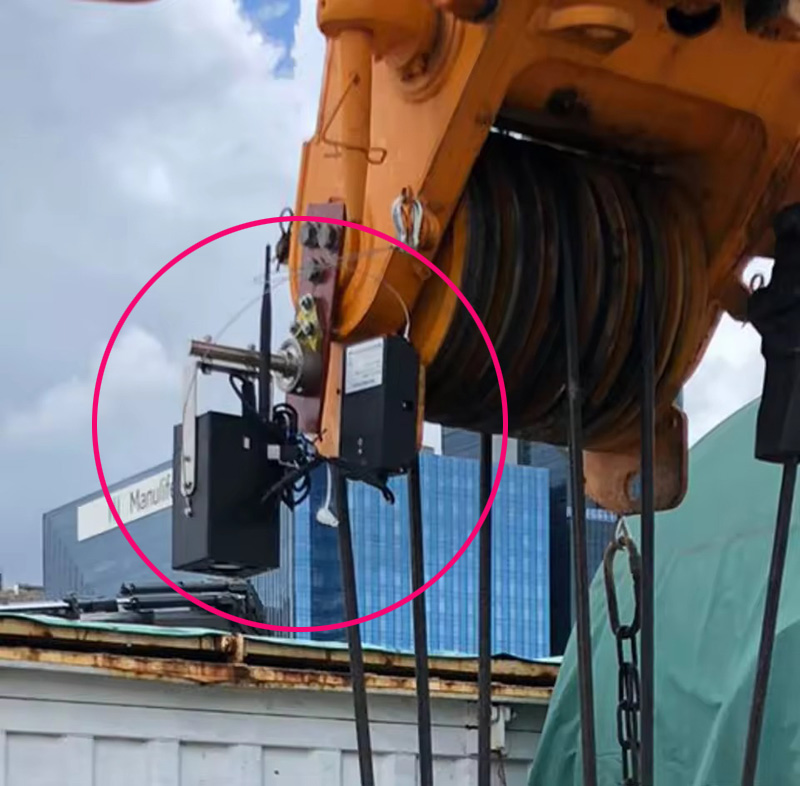
Camera Mounting: Magnetic or Mechanical Fixing?
One common question for portable wireless crane cameras is whether magnetic mounting is suitable offshore.
Magnetic mounting is convenient because it allows quick installation and removal. However, offshore cranes experience dynamic movement caused by wind, vibration, and wave conditions.
For permanent offshore crane applications, we recommend a more secure mechanical fixing method, such as screw mounting or a dedicated bracket.
The magnetic function is more suitable for components that require frequent removal, such as a rechargeable battery pack.
A proper mounting design helps prevent unexpected movement and improves long-term stability.
Battery Protection in Marine Environments
Battery performance is another important consideration.
In offshore environments, the battery system may face:
- Moisture exposure
- Salt accumulation
- Temperature changes
- Frequent charging cycles
A properly designed battery housing can reduce environmental impact, but regular maintenance is still important.
Recommended practices include:
- Avoid direct seawater exposure
- Keep charging connectors clean and protected
- Check sealing conditions regularly
- Remove salt residue when necessary
For applications requiring long operating hours, evaluating additional battery packs or charging solutions in advance can help avoid downtime.
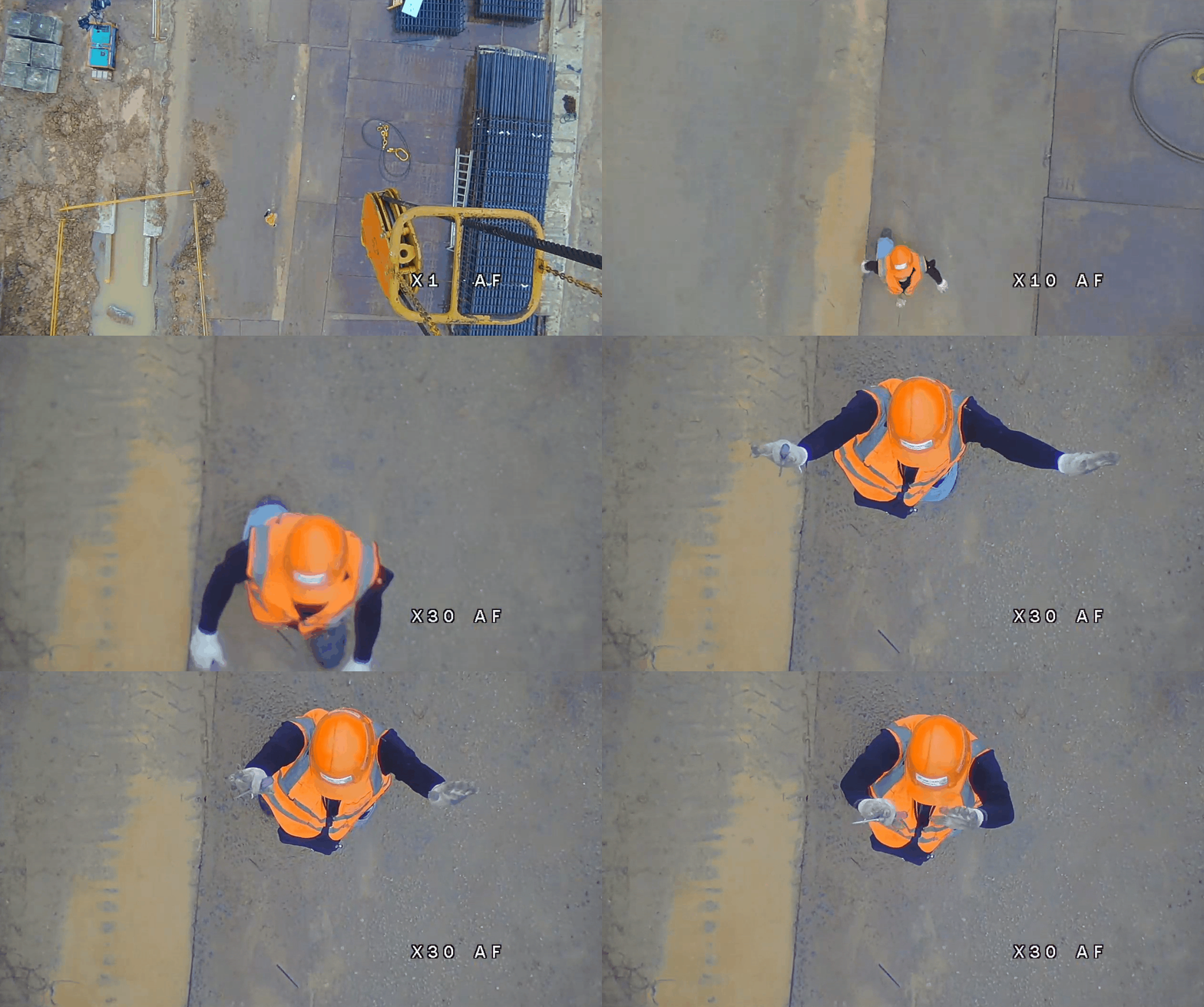
Engineering Experience Matters
At LINTECH, we have many years of experience developing vehicle camera and monitoring systems for harsh environments.
Compared with consumer surveillance products, vehicle camera systems face much more demanding conditions, including:
- Rain and water exposure
- Dust and mud
- Strong vibration
- Temperature variation
- Long-term outdoor operation
This experience has helped us understand that waterproof protection, mechanical reliability, and system stability are equally important.
Although offshore marine applications are not the majority of our projects, we have supported customers using similar monitoring solutions on vessels and marine equipment.
These real-world applications help us better evaluate environmental risks and recommend suitable installation methods.

A Reliable Offshore Camera System Requires More Than a Camera
For offshore crane monitoring, the best solution is not simply choosing a high-resolution camera.
A reliable system should consider:
- Camera waterproof protection
- Battery design
- Mounting structure
- Charging method
- Maintenance requirements
- Actual working conditions
By evaluating the complete application environment, customers can achieve a safer and more reliable monitoring solution.
